
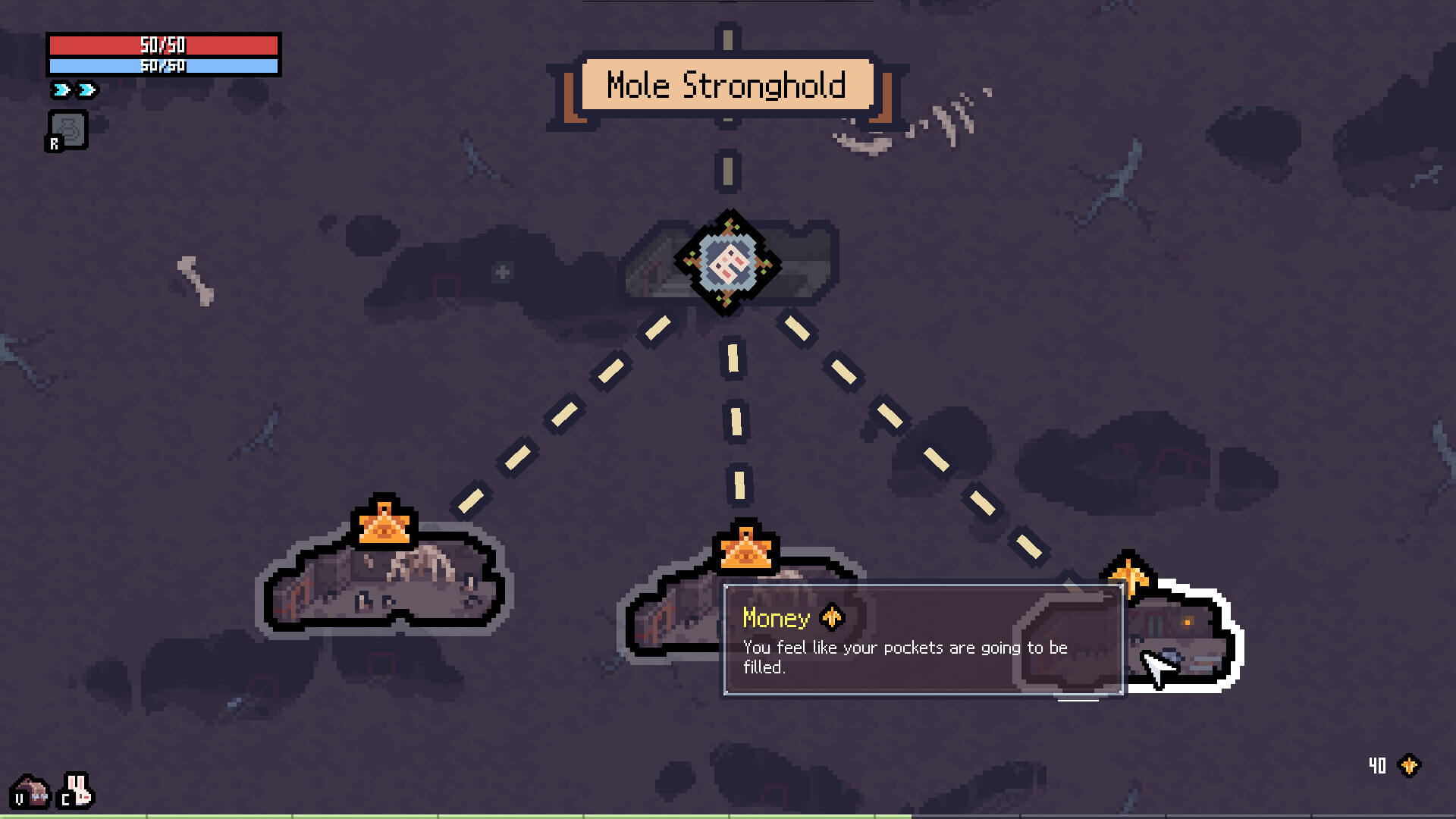
Sephiria is a top-down action roguelite about saving Bunnyville by descending through a tower. Each run combines direct combat with weapon upgrades, Talents, Artifacts and Tablets. Beginner power rarely comes from one item; it comes from several systems supporting the same decision.
01Learn the two combat verbs
Start with attack and block. Use the early rooms to learn when an attack commits you and when blocking gives you a safer read. Consistency matters more than squeezing in one extra hit. When a new weapon changes the rhythm, test its normal, defensive and special actions before judging an upgrade.
Attack with intent
Count how many actions fit safely into an enemy opening. Do not judge a weapon only by its first damage number.
Block to learn
A safe defensive read teaches enemy patterns faster than repeated greedy trades.
02Choose a weapon rhythm, not a tier
The launch description lists six weapons with more than 50 upgrades each. A weapon is therefore a route, not a fixed stat stick. Begin with timing you can execute reliably, then choose upgrades that reinforce the attacks you already land.
Compare all six weapon branches03Treat inventory space as combat power
Artifacts grant effects, while Tablets empower adjacent Artifacts. Before filling an empty cell, check what the new piece displaces and whether the surrounding positions already do useful work. A tidy board is not automatically a strong one; know which effect you are trying to activate.
The current Board Planner is a visual sketching tool. It does not simulate unverified Tablet ranges or damage values.
04Use a first-run decision loop
- 1Survive the room.
Prioritise a repeatable combat rhythm over a theoretical synergy.
- 2Name the route.
Choose one useful theme—guard, Lightning, Elemental, cold or timing—not every tag at once.
- 3Inspect the board.
Before accepting a piece, decide where it can fit and what it will support.
- 4Re-check after a patch.
When an effect feels different, check the database source before relying on an old build note.
First-run questions
Quick answers before the next room
Use these short answers to make a safer next decision. They are practical starting points, not a fixed tier list or a promise that every run will offer the same items.
What should I prioritise in my first run?
Start by clearing rooms with a rhythm you can repeat: learn an enemy opening, attack only when you can recover, and block when it gives you time to read the next pattern. A stable run is more useful than chasing one theoretical synergy.
Which weapon should a new player start with?
There is no official beginner ranking. Try the normal, defensive and special actions of the available weapon, then keep the one whose timing you can execute reliably. The best first choice is the rhythm that lets you survive long enough to learn from the run.
Should I take every upgrade with a matching tag?
No. Choose one useful direction first, then prefer upgrades that improve attacks you are already landing or solve a current weakness. A shared tag is context for testing, not proof that every matching item belongs in the same build.
When should I rearrange my inventory?
Pause before accepting a new piece if it will displace an active Artifact or change which adjacent items a Tablet can empower. Decide what effect you are trying to support before you optimise for a tidy-looking board.
Does the Board Planner calculate the best layout?
No. It is a private visual sketching workspace for arranging known icons. It does not calculate unverified Tablet ranges, levels, damage or an optimal board, so confirm a layout against the live game before relying on it.
Can I follow an old build or guide after a patch?
Treat old advice as a lead, not a guarantee. Check the version, open the linked official source and compare the current tooltip or behaviour in your run before trusting an older value, trigger or build recommendation.